
Gold IRA Approved Metals:
IRS Eligible Coins and Bullion
Last reviewed for regulatory accuracy: March 2026
For individuals researching how alternative assets may be structured within retirement accounts, physical precious metals often emerge as a primary area of focus. However, incorporating physical assets into a tax-advantaged retirement vehicle is a highly regulated process governed by strict federal tax laws. Understanding which gold IRA approved metals qualify under U.S. tax law is a foundational step for anyone researching how physical bullion can be structured within a retirement account.
The Internal Revenue Service (IRS) does not permit all types of physical gold, silver, platinum, or palladium to be held inside a self-directed retirement account. Instead, the federal tax code strictly delineates between prohibited "collectibles" and specific bullion products that meet rigorous purity and production standards. Navigating these rules requires a careful examination of the statutes that govern these accounts.
This educational guide explores the regulatory framework surrounding gold IRA approved metals. It outlines the specific purity thresholds required by the IRS, examines the unique statutory exceptions granted to certain sovereign coins, and details the types of metals that are explicitly excluded from retirement accounts. For a broader overview of how these accounts function, readers may also review our comprehensive Gold IRA guide.
IRS Requirements for Precious Metals in an IRA
The primary legal framework governing physical precious metals within Individual Retirement Accounts is found within Internal Revenue Code Section 408(m). This section of the U.S. tax code establishes the general prohibition against holding collectibles in an IRA, while simultaneously carving out specific statutory exceptions for highly refined bullion and certain authorized sovereign coins.
To qualify as gold IRA approved metals, bullion products must meet the statutory requirements outlined in Section 408(m) of the Internal Revenue Code. The IRS mandates that these metals must be manufactured by a national government mint or a recognized private refiner, assayer, or manufacturer that meets specific accreditation standards (such as NYMEX or COMEX approval).
Required Purity Thresholds
| Precious Metal | Minimum Purity | Example Coins |
|---|---|---|
| Gold | .995 | American Gold Eagle, Maple Leaf |
| Silver | .999 | American Silver Eagle |
| Platinum | .9995 | Platinum Eagle |
| Palladium | .9995 | Palladium Maple Leaf |
If an investor’s self-directed IRA acquires physical metals that do not meet these strict fineness thresholds, the IRS generally treats the transaction as the acquisition of a collectible. Under tax law, purchasing a collectible with IRA funds is considered a taxable distribution equal to the cost of the asset, which may also trigger early withdrawal penalties if the account holder is under the age of 59½.
Furthermore, simply purchasing approved metals is not enough to maintain tax-advantaged status. The IRS requires that all qualifying metals remain in the physical custody of an approved institutional trustee or depository. Personal possession of IRA-owned metals is strictly prohibited and violates the custodial requirements established by the tax code. The statutory definitions contained in Section 408(m) form the primary legal reference used by custodians and retirement administrators when determining whether a bullion product qualifies as an IRA-eligible asset.
Gold Coins That Meet IRS Eligibility Rules
When researching irs approved gold coins ira, investors will find that several globally recognized sovereign coins meet the strict purity requirements necessary for inclusion in a retirement account.
The American Gold Eagle
Perhaps the most frequently researched coin in this category is the American Gold Eagle. This coin represents a unique and highly specific exception within the U.S. tax code.
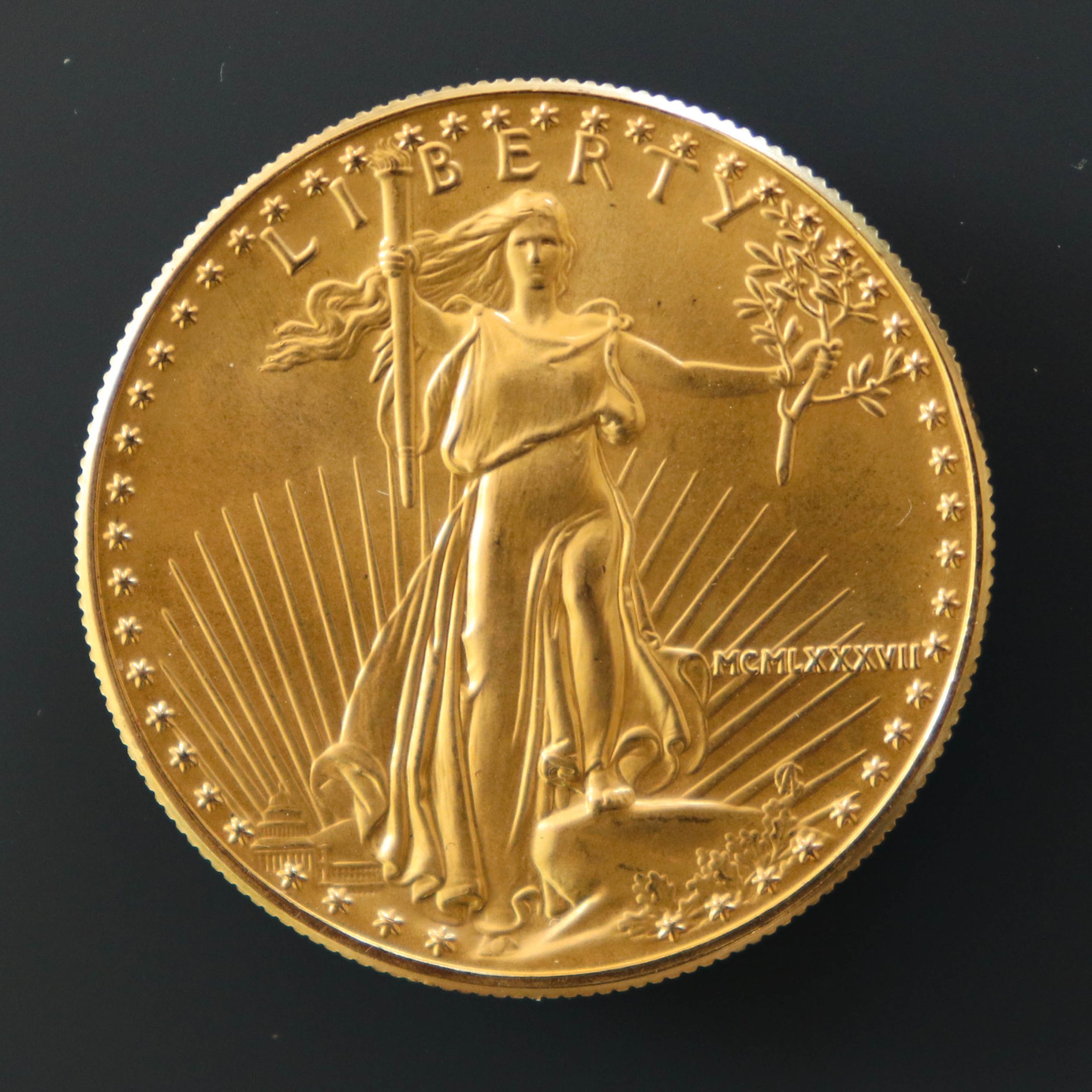
The American Gold Eagle is minted from 22-karat gold, meaning it has a fineness of .9167 (91.67% pure). Mathematically, this falls short of the standard .995 purity requirement established for gold bullion under Section 408(m)(3). However, these coins remain fully eligible for IRA inclusion because of a specific statutory carve-out. The U.S. Congress explicitly authorized the inclusion of American Gold Eagles in retirement accounts under 31 U.S.C. § 5112. This unique legal provision allows these specific coins to bypass the standard fineness requirements that apply to virtually all other gold products.
The Canadian Gold Maple Leaf
Another widely recognized example of IRA eligible gold coins is the Canadian Gold Maple Leaf, produced by the Royal Canadian Mint.
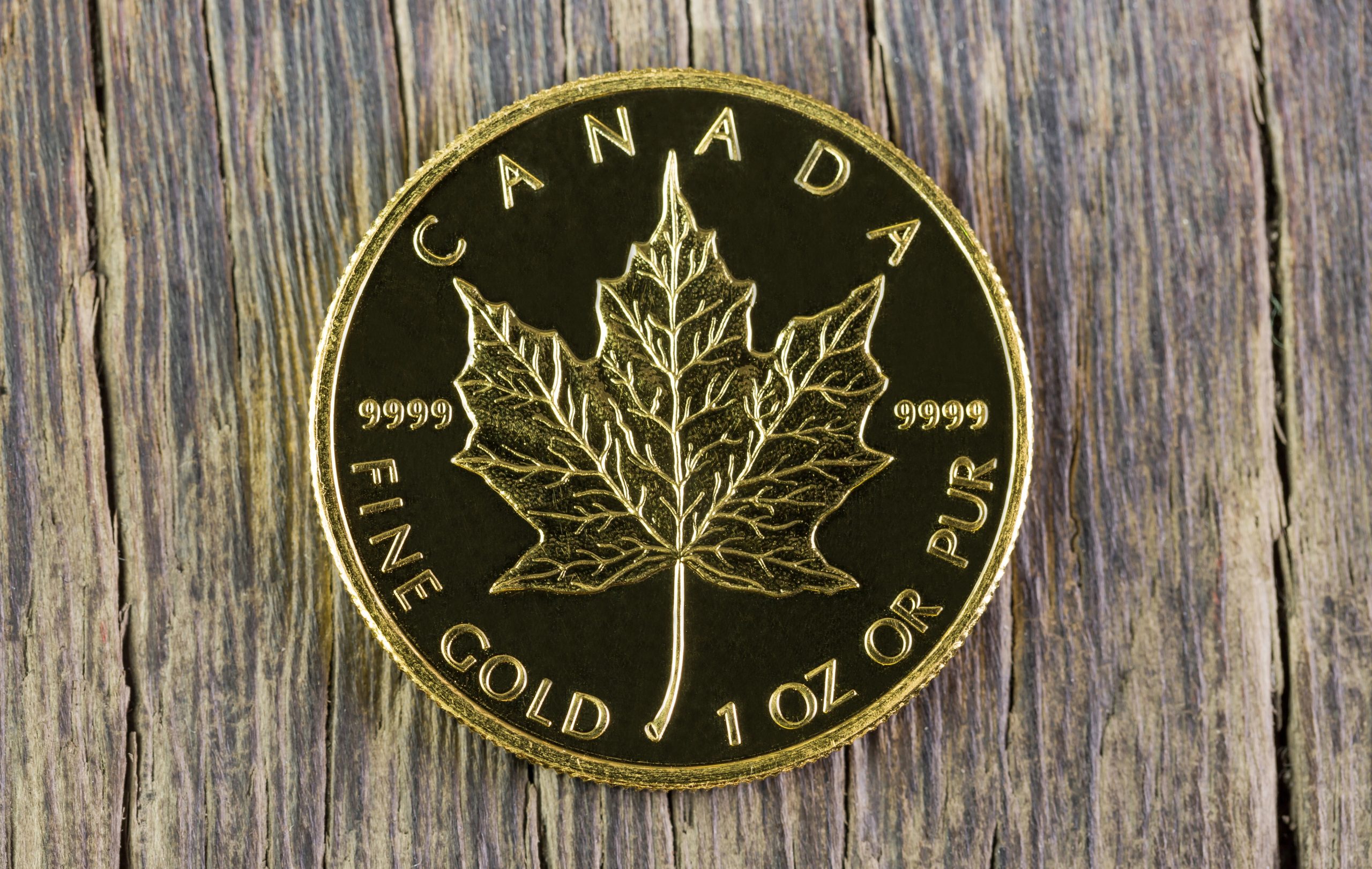
Unlike the American Gold Eagle, the Canadian Gold Maple Leaf does not require a special statutory exception to qualify for IRA inclusion. It qualifies purely on its metallurgical merits. The Canadian Gold Maple Leaf is minted at a fineness of .9999 (99.99% pure), which easily exceeds the IRS's minimum requirement of .995. Other examples of gold coins that meet this purity standard include the Austrian Gold Philharmonic and the Australian Gold Kangaroo, both of which appear in institutional comparisons of IRA-eligible metals and custodial offerings.
In addition to sovereign coins, investors often examine gold bullion bars. Provided these bars are stamped with their weight, fineness, and the hallmark of an accredited refiner, and meet the .995 purity threshold, they are generally permissible under IRS guidelines.
Silver, Platinum, and Palladium Eligibility
While gold is the most commonly researched metal, the Internal Revenue Code also permits the inclusion of silver, platinum, and palladium, provided they meet their respective, more stringent purity requirements.
The American Silver Eagle
The American Silver Eagle is the official silver bullion coin of the United States.
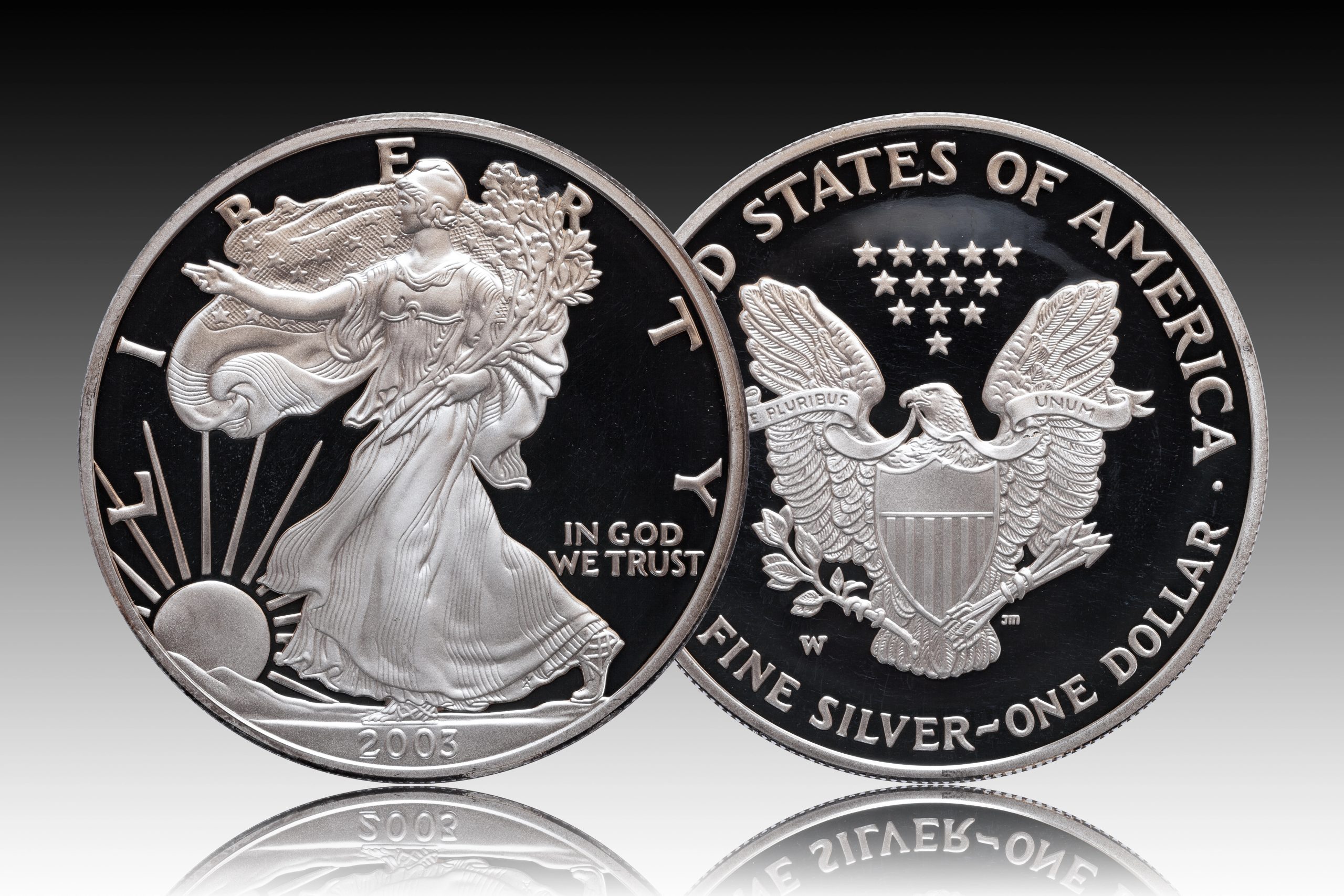
Minted by the United States Mint, the American Silver Eagle contains one troy ounce of 99.9% pure silver (.999 fineness). Because it precisely meets the IRS purity threshold for silver, it is widely recognized as an approved metal for self-directed IRAs. Other silver coins that meet this standard include the Canadian Silver Maple Leaf (.9999 fine) and the Austrian Silver Philharmonic (.999 fine).
Platinum and Palladium
Platinum and palladium products face the highest purity thresholds under IRS rules, requiring a minimum fineness of .9995. Approved coins in these categories are less common than gold and silver but include sovereign issues such as the American Platinum Eagle, the Canadian Platinum Maple Leaf, and the Canadian Palladium Maple Leaf. As with gold and silver, appropriately hallmarked bars and rounds produced by accredited refiners that meet the .9995 standard are also permitted.
Metals That Are Not Allowed in an IRA
Understanding what is permitted naturally leads to an examination of what is explicitly forbidden. The IRS rules are rigid, and many popular physical metal products are strictly barred from retirement accounts.
Metals and coins that are generally not allowed in an IRA include:
-
Pre-1933 Gold Coins Historical U.S. gold coins are classified as collectibles. Their value is largely derived from age and rarity.
-
The South African Krugerrand Minted at 22-karats (.9167) without a statutory exception in the U.S. tax code, making it ineligible.
-
Graded "Numismatic" Coins Encapsulated coins sold at a high premium over their "melt value" are frequently treated as collectibles.
-
Certain Sovereign Coins Coins such as the UK Gold Sovereign or French 20 Francs do not meet the .995 purity threshold.
For a more comprehensive institutional breakdown of how the IRS defines these prohibited assets, readers can review our detailed analysis: IRS Code Section 408(m): The Collectibles Rule Explained.
Why Certain Coins Are Excluded Under IRS Rules
The exclusion of specific coins and metals is rooted in the legislative intent behind the U.S. tax code's treatment of retirement assets. The IRS allows self-directed IRAs to hold physical precious metals primarily as a means of allowing investors to hold commodities with intrinsic value.
When a coin derives a significant portion of its market value from factors other than its raw metal content—such as historical significance, rarity, aesthetic condition, or mintage numbers—it crosses the line from a commodity into a "collectible." Section 408(m)(2) of the Internal Revenue Code was designed specifically to prevent retirement accounts from speculating on art, antiques, and rare coins.
The IRS views the premium attached to numismatic and rare coins as speculative value rather than intrinsic commodity value. Therefore, the regulatory framework is designed to limit IRA investments to metals where the market price is overwhelmingly dictated by the spot price of the underlying commodity, rather than subjective collector demand. This is why a .9999 pure Canadian Maple Leaf is approved, while a historically significant 1907 gold coin of lower purity is classified as a prohibited collectible.
Common Questions About Gold IRA Approved Metals
When examining how physical precious metals function within a retirement framework, investors typically research several structural and regulatory questions.
Q. What metals are allowed in a gold IRA?
As detailed throughout this analysis, the metals allowed are strictly limited to gold (.995 fineness), silver (.999 fineness), platinum (.9995 fineness), and palladium (.9995 fineness), with the notable statutory exception of the 22-karat American Gold Eagle.
Q. Can an investor take personal, physical possession of the metals in their IRA?
No. The tax code requires that IRA assets be held by a qualified trustee or custodian. Taking personal, physical possession of IRA-purchased metals is viewed by the IRS as a distribution. This regulatory stance was heavily reinforced by the United States Tax Court decision in McNulty v. Commissioner (2021), which ruled that an IRA owner cannot maintain physical control over the account's assets without triggering tax consequences.
Q. How does an investor acquire irs approved gold coins ira?
Investors typically work through a self-directed IRA custodian to facilitate the purchase. The custodian ensures that funds are properly transferred and that the metals are shipped directly from an authorized dealer to a compliant institutional depository. Investors researching this process often review data on institutional providers. For those conducting due diligence on custodians and dealers, examining independent comparisons of the best gold IRA companies is a common step in understanding fee structures and compliance protocols.
Q. Are there differences in storage requirements for different metals?
No. Whether the account holds silver, gold, platinum, or palladium, the regulatory requirement for approved third-party institutional custody remains exactly the same under IRS rules.
Key Regulatory Considerations
The process of allocating retirement funds into physical precious metals is governed by a complex intersection of tax laws and institutional protocols. Investors researching this asset class must be keenly aware of three primary regulatory pillars:
Strict Purity Compliance
Metals must either meet the exact fineness thresholds established by IRC Section 408(m)(3) or fall under the precise statutory exemption of 31 U.S.C. § 5112. Any deviation generally results in the asset being classified as a prohibited collectible.
Mandatory Institutional Custody
Physical possession is incompatible with the tax-advantaged status of an IRA. Metals must be stored at a specialized, IRS-approved depository to maintain tax benefits.
Prohibited Transactions
The IRS strictly forbids "self-dealing." An investor cannot sell precious metals they already own to their IRA, nor use IRA-owned metals as collateral. All transactions must be arm's length.
Conclusion
The inclusion of physical precious metals within an Individual Retirement Account represents a regulatory framework that allows certain bullion commodities to be held inside a tax-advantaged retirement structure. However, the regulatory boundaries governing gold IRA approved metals are rigid and unforgiving of administrative errors.
Internal Revenue Code Section 408(m) establishes a clear dividing line between acceptable bullion commodities and prohibited collectibles. By mandating strict purity standards and requiring institutional custody, the statutory framework ensures that only highly refined, market-standardized metals benefit from the tax-advantaged environment of an IRA. Understanding these precise legal parameters is essential for anyone evaluating the role of physical metals in long-term retirement strategies.
About Maitland Wealth
Maitland Wealth is an independent research and publishing platform focused on precious metals investing, Gold IRA regulatory frameworks, and alternative retirement strategies. The platform publishes compliance reports, regulatory analysis, and institutional research examining how precious metals are structured within retirement accounts under U.S. tax law. Maitland Wealth does not provide investment advisory services.
Disclaimer: This research article is provided for informational and educational purposes only and does not constitute investment, tax, or legal advice. Maitland Wealth does not provide investment advisory services. Readers should consult a qualified financial professional or tax attorney regarding their specific IRA circumstances. Please review our Disclaimer page for additional information.